Colocation Rack Space Costs: What You Pay For and Why
By Daniel Reeves · Published · 4 min read

Colocation quotes rarely fail because of the headline rent. They fail because the rent covers floor space and little else: power is metered separately, cross-connects carry a one-time and a recurring charge, and remote hands start billing the moment a ticket is opened. Understanding which line items scale with your footprint and which are fixed per account is the difference between a $600 and a $1,400 monthly invoice for what looks like the same half-rack.
This guide walks through the rack sizes you will actually be offered, how power is billed and why amperage matters more than square footage, what the recurring extras add up to, and where colocation stops making sense compared with renting instances. Numbers are typical ranges for tier-2 and tier-3 facilities in mid-sized metro markets; dense financial-district or downtown locations run higher.
The Rack Sizes and What They Actually Hold
Providers sell space in four rough tiers: a quarter rack (about 10U), a half rack (18-21U), a full 42U cabinet, and multi-cabinet cages. Quarter racks typically rent for roughly $150-$400 per month, half racks $300-$700, and full cabinets $600-$1,500 depending on market and power included. The U count sounds generous until you account for patch panels, cable management, and the 2U or 3U that a pair of top-of-rack switches quietly consumes.
Usable depth matters as much as height. A standard cabinet is around 1,000-1,200 mm deep, but older facilities may have shallower frames that cannot close the door on a 900 mm-deep server with rear cabling. Check the weight limit too: 500-1,000 kg per cabinet is common, and a fully loaded 2U storage node can hit 30 kg on its own. Ask for a floor plan with the actual cabinet model before signing.
- Quarter rack: ~10U, entry point for a single firewall and two servers
- Half rack: 18-21U, the most common small-business footprint
- Full cabinet: 42U, priced on power as much as on space
- Confirm depth, weight limit, and door clearance before committing
Power Is the Real Unit of Billing
Modern colocation is priced on amperage, not square meters. A half rack might include 2-4 kW of committed power at 208V or 230V; anything above the committed allocation is billed per kWh, often at $0.10-$0.25/kWh, or throttled. If your committed draw is 3 kW and your dual-corded servers actually pull 4.5 kW under load, you will pay overage every month or be asked to upgrade to a larger footprint.
Measure before you commit. A rack PDU with per-outlet metering costs a few hundred dollars and gives you real consumption data for a month. Size your committed power at peak draw plus 20-30% headroom, not at nameplate ratings, which are typically double what the hardware actually pulls. Facilities with redundant A and B power paths usually charge a premium for the second feed, so confirm whether redundancy is included or an add-on.
| Footprint | Space rent | Included power | Cross-connects (2) | Realistic all-in total |
|---|---|---|---|---|
| Quarter rack (~10U) | $150-$400 | 1-2 kW | $100-$250 | $350-$800 |
| Half rack (18-21U) | $300-$700 | 2-4 kW | $100-$300 | $550-$1,300 |
| Full cabinet (42U) | $600-$1,500 | 4-8 kW | $200-$500 | $1,000-$2,600 |
| Two cabinets / small cage | $1,400-$3,000 | 8-15 kW | $300-$800 | $2,200-$5,000 |
| Remote hands (per hour) | $75-$200 | n/a | n/a | $75-$300 with after-hours rate |
Recurring Extras That Change the Total
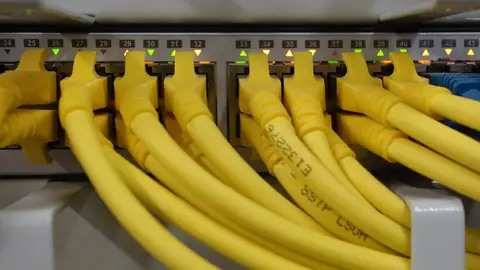
Cross-connects are the classic surprise. A single copper cross-connect to a carrier or internet exchange runs roughly $50-$150 per month plus a $100-$300 setup fee; a 10G single-mode fiber pair can be $200-$500 monthly. Two providers plus a management network and you have added several hundred dollars before a single packet moves. Ask for a cross-connect price list, not a verbal estimate.
Remote hands is the other variable. Typical rates are $75-$200 per hour, often with a 15- or 30-minute minimum per ticket and after-hours surcharges of 1.5x. Reboots and cable swaps are cheap; anything involving opening a chassis is not. Bandwidth, IP allocations, and KVM-over-IP access may each carry small monthly fees. Budget 15-25% above the quoted rent for these line items, and compare against the full picture using a monthly cost breakdown before deciding.
Contract Terms, SLAs, and Escalators
Colocation contracts run one to three years, with annual escalators commonly in the 3-5% range. Watch for auto-renewal clauses that extend for twelve months unless cancelled 60 or 90 days out. Power and cooling SLAs are usually expressed as availability percentages with service credits, but credits are typically calculated against the monthly recurring charge for the affected circuit, not your business losses, so a 99.99% promise may be worth a few hundred dollars at most.
Read the SLA for what it excludes: scheduled maintenance windows, upstream carrier failures, and customer-caused outages are routinely carved out. Before you sign, it pays to know how to read a data center SLA without getting fooled, especially the credit calculation and the notice period for maintenance. Also confirm whether the provider requires you to insure the equipment and whether they carry liability for damage during their own work.
When Colocation Beats Renting Instances
Colocation wins when you already own hardware with remaining life, need physical control of data, or run workloads with steady, predictable load. A $900 monthly half-rack holding eight servers works out to roughly $110 per server per month once power and cross-connects are included, which is competitive with mid-size cloud instances but only if those servers stay busy. Idle hardware in a cabinet is the most expensive compute you can buy.
It loses when your load is spiky, your team is small, or you value the ability to spin up capacity in minutes. The crossover usually appears somewhere between a handful of servers and a full cabinet. If you are weighing a migration to owned hardware, work through how to calculate cloud storage costs first, because egress and storage tiers often shift the math more than compute pricing does.
Practical Steps Before You Sign
Start with a measurement month. Collect actual power draw, rack U usage, and peak bandwidth from your current environment, then map that onto the smallest footprint with 25% headroom. Request a written quote that itemizes rent, committed power, overage rate, cross-connects, remote hands rates, setup fees, and the escalator. Two providers quoting the same rack can differ by 40% once the line items are laid out side by side.
Visit the facility and look at the actual cage or cabinet row: cooling layout, security, loading dock access, and whether the aisle is clear. Confirm the process and lead time for shipping hardware in, and who signs for it. Finally, plan the exit: removal deadlines, de-installation fees, and whether cross-connects can be transferred. If your team is distributed, pair the decision with a realistic view of bandwidth needs for a remote team so the network design holds up after the move.
- Power, not floor space, drives the invoice: size committed amperage at peak draw plus 20-30% headroom.
- Cross-connects and remote hands routinely add 15-25% to the headline rent, so demand an itemized quote.
- Watch 3-5% annual escalators and 60-90 day auto-renewal notice periods before signing a multi-year term.
- Colocation pays off for steady, owned workloads; spiky or small-scale loads are usually cheaper as rented instances.
Daniel focuses on practical hardware buying and data center operations. He writes step-by-step guides that turn equipment specs into budgets and checklists for small IT teams.